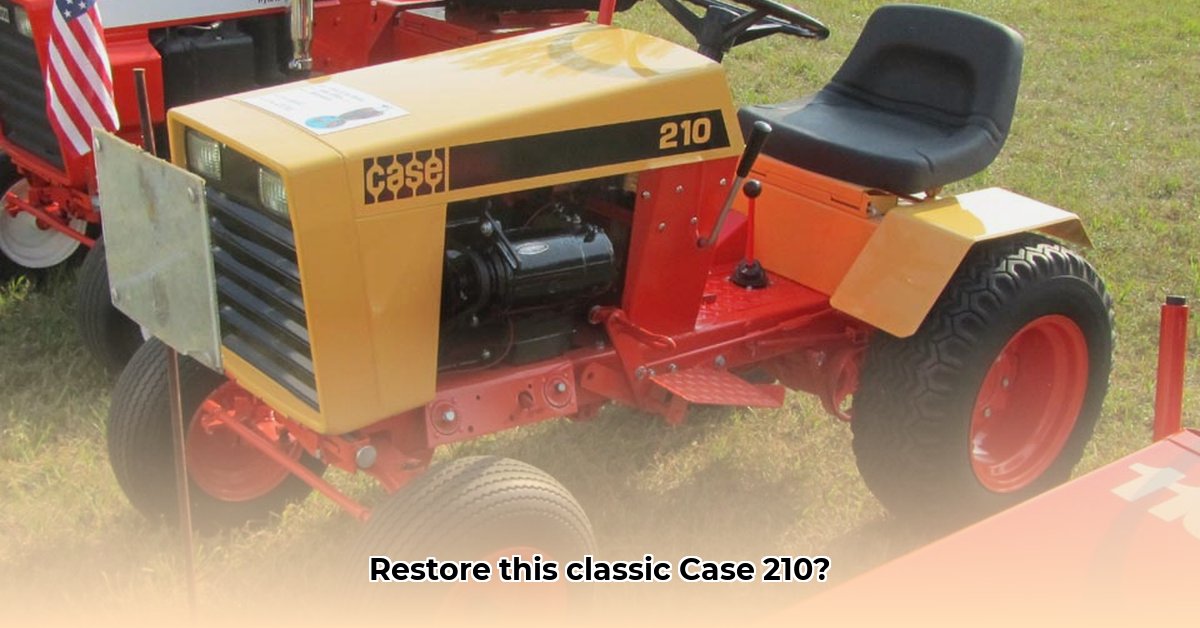
The J.I. Case 210 and 210-B garden tractors represent distinct eras in agricultural and horticultural machinery, each offering a unique restoration challenge and rewarding experience for collectors. For additional Case tractor resources, check out this helpful link. This guide delves into the key differences between these two models, providing essential information for successful restoration and maintenance. Whether you're a seasoned veteran or a first-time restorer, understanding these distinctions is crucial for preserving these pieces of history.
Case 210 vs. 210-B: A Comparative Analysis
The Case 210 and 210-B, while sharing the Case name, are vastly different machines reflecting distinct design philosophies and target markets. The 210, produced from 1973 to 1983, caters to the residential gardener, while the 210-B, manufactured between 1958 and 1959, was designed for more demanding agricultural tasks. This fundamental difference shapes their design, features, and restoration processes.
Engine and Power: A Tale of Two Engines
The heart of any tractor is its engine. The Case 210 features a compact and relatively low-powered 10-horsepower Kohler engine (391cc). This smaller engine was perfectly adequate for the lighter tasks of residential lawn and garden maintenance. In contrast, the 210-B boasted a significantly more powerful 2.1-liter four-cylinder engine—likely exceeding 20 horsepower—capable of handling much heavier workloads and tougher terrain. This substantial difference highlights the distinct applications each model was engineered for. Isn’t it fascinating how engine choice dictated the tractor's ultimate purpose?
Transmission and Control: Versatility vs. Simplicity
Both tractors utilize a four-speed transmission, but the 210-B offered significantly more versatility with optional 8-speed and 12-speed transmissions, including an 8-speed shuttle shift. These options provided farmers with greater control and efficiency in varied agricultural settings. The 210, on the other hand, maintained a simpler, four-speed transmission perfectly suited to its less demanding residential role. This difference in transmission options again underscores the targeted functionality of each model.
Size and Weight: A Matter of Scale
The physical dimensions of the two tractors further emphasize their distinct purposes. The Case 210, weighing in at a manageable 515 pounds, was designed for ease of use and storage in smaller spaces. Its compact size and light weight made it ideal for residential applications. The 210-B, however, was a much larger and heavier machine, weighing approximately 2862 pounds, with a substantially longer wheelbase. This robust construction was essential for its heavy-duty agricultural tasks, ensuring stability and power when pulling heavier loads.
Key Specifications: A Side-by-Side Comparison
| Feature | Case 210 | Case 210-B |
|---|---|---|
| Engine | 10hp Kohler 391cc | 2.1L 4-cylinder (estimated 20+ hp) |
| Transmission | 4-speed | 4-speed, optional 8/12-speed |
| Weight | 515 lbs | 2862 lbs |
| Wheelbase | 46 inches | 75.5 inches |
| Electrical System | Negative Ground | Positive Ground |
| Fuel Tank | 3 gallons | 13 gallons |
Restoring Your Case 210/210-B: A Step-by-Step Guide
Restoring either a Case 210 or 210-B requires dedication and meticulous attention to detail. The following steps provide a framework for a successful restoration project:
- Assessment: Thoroughly inspect the tractor's condition, identifying parts requiring repair or replacement. Documenting this process with photos and notes is highly beneficial.
- Parts Sourcing: This is often the most challenging aspect. Utilize online retailers specializing in vintage tractor parts, local repair shops, online forums, and salvage yards. Knowing the exact part number (from the owner’s manual or online diagrams) is crucial for efficiency.
- Disassembly: Carefully disassemble the tractor, taking pictures and notes to aid in reassembly. Cleaning each part thoroughly is essential before repair or replacement.
- Repair and Replacement: Repair or replace damaged or worn components. OEM parts are ideal but can be harder to find and more expensive. Aftermarket parts offer a more readily available and cost-effective alternative, but quality can vary significantly.
- Reassembly: Reassemble the tractor, carefully following your notes and photos. This phase requires patience and precision.
- Testing and Fine-tuning: Once reassembled, test the tractor's functionality, addressing any remaining issues. Proper lubrication is vital for long-term performance and longevity.
This process is inherently time-consuming, and patience is paramount for a successful restoration.
Finding Replacement Parts: A Practical Guide
Locating parts for a vintage tractor can be challenging. Here's a structured approach:
- Online Retailers: Websites like Yesterday's Tractors are excellent resources for locating parts using part numbers.
- Local Dealers/Repair Shops: Contact local Case dealers or tractor repair shops. They may have access to parts or know reliable suppliers.
- Online Forums & Communities: Engage with online communities dedicated to Case tractors; experienced restorers often share valuable resources.
- Salvage Yards: Salvage yards and junkyards can yield unexpected finds, although patience and careful inspection are essential.
- OEM vs. Aftermarket: Carefully weigh the cost and quality trade-offs between OEM and aftermarket parts.
Remember that finding the correct part numbers is crucial for a successful search. Consult your owner's manual or online resources providing part diagrams for your specific model.